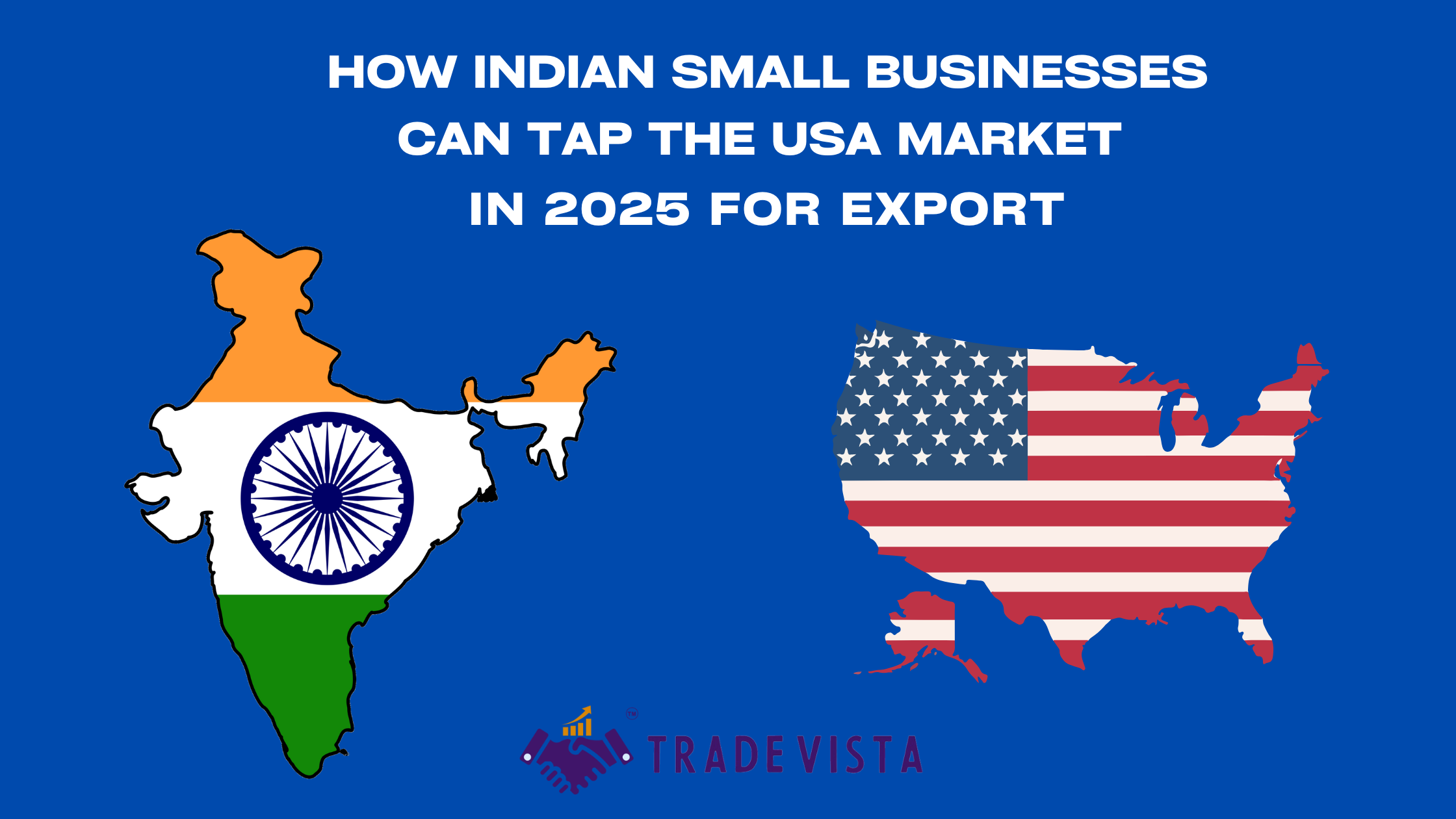
The USA market represents a $3.4 trillion import opportunity for Indian small businesses in 2025, driven by surging demand for organic goods, sustainable products, and tech innovation. While sectors like wellness, handicrafts, and IT services offer unmatched growth potential, navigating regulatory hurdles, cultural nuances, and logistics remains critical. This guide equips Indian entrepreneurs with actionable strategies—from leveraging e-commerce platforms to mastering FDA compliance—to transform challenges into global success stories. Learn how to align your business with U.S. consumer trends, optimise supply chains, and tap into government incentives to thrive in one of the world’s most competitive markets.
Key Opportunities in the USA Market
The U.S. remains a top export destination for Indian businesses, with $128.8 billion in bilateral trade (2023) and growing demand across sectors.
High-Growth Sectors
Sector | 2025 Projected Demand | Key Drivers |
Organic Food | $70 billion | Health-conscious consumers |
Ayurvedic Products | $25 billion | Wellness trends and global Ayurveda boom8 |
Handicrafts | $400 million | Demand for ethical, artisanal goods |
IT Services | $1.3 trillion | Remote work and tech innovation |
Pharmaceuticals | $650 billion | Demand for affordable generics |
Textiles & Apparel | $142 billion | Sustainable/ethnic fashion trends |
Renewable Energy | $1.3 trillion | Climate policies and tax incentives |
Tech Accessories | $1.6 trillion | Remote work adoption and e-commerce growth |
Ethnic Foods & Spices | $10 billion | Culinary diversity and convenience |
Medical Devices | $650 billion | Cost-effective healthcare solutions |
Expanded Sector Insights
Pharmaceuticals
- India supplies 20% of global generic drugs and is a trusted partner for U.S. healthcare providers.
- Opportunity: Focus on FDA-compliant generics and niche therapies.
Textiles & Apparel
- U.S. demand for sustainable cotton and handloom products aligns with India’s strengths.
- Example: Brands like FabIndia leverage eco-friendly fabrics for Western markets.
Renewable Energy
- U.S. states like California offer tax incentives for solar energy components.
- Opportunity: Export solar panels, batteries, and EV parts.
Tech Accessories
- Wearable tech (e.g., smart watches) and eco-friendly gadgets are in high demand.
- Example: Indian brands like boAt and Noise dominate affordable tech accessories.
Ethnic Foods & Spices
- Ready-to-eat meals and spice blends (e.g., MDH, Everest) cater to diverse U.S. demographics.
- Trend: 30% growth in global ethnic food sales since 2023.
Medical Devices
- The U.S. imports $65 billion in medical devices annually; India’s cost-effective manufacturing is a key advantage.
Why These Sectors?
- Alignment with U.S. Trends: Sustainability, health, and tech adoption drive demand.
- Government Support: Schemes like PLI (Production-Linked Incentives) boost manufacturing competitiveness.
- Cultural Relevance: Indian handicrafts, spices, and Ayurveda resonate with U.S. consumers seeking authenticity.
Emerging Trends:
- E-commerce Boom: 60% of U.S. shoppers buy international products online.
- Sustainability: 73% pay extra for eco-friendly goods.
Regulatory Compliance Simplified
Avoid costly delays by understanding U.S. requirements:
Regulation | What It Covers | Action Steps |
FDA Approval | Food, pharma, cosmetics | Partner with U.S. compliance consultants |
FTC Guidelines | Labeling and advertising | Ensure straightforward, honest product claims |
Customs Duties | Tariffs (avg. 3.4%) | Use codes for accurate classification |
Pro Tip: Leverage the U.S.-India Generalized System of Preferences (GSP) for duty-free exports on select products.

Actionable Market Entry Strategies
1. Validate Your Product
- Use tools like Google Market Finder to identify U.S. regions/demographics.
- Test demand via small e-commerce shipments (e.g., Amazon, Etsy).
2. Build a Digital Presence
- E-commerce: List products on Amazon Global Selling and Walmart Marketplace.
- Marketing: Use Instagram Reels/TikTok for storytelling (e.g., showcase artisans making handicrafts).
3. Partner Strategically
- Join networks like the U.S.-India Business Council (USIBC).
- Collaborate with U.S. distributors (e.g., FabIndia’s Whole Foods partnership).
Financing & Logistics Made Easy
Funding Options
Option | Details |
ECGC Insurance | Covers payment risks |
EXIM Bank Loans | Low-interest export financing |
Kickstarter | Crowdfunding for market validation |
Logistics Tips
- Shipping: Use FedEx/DHL for small orders sea freight for bulk.
- Warehousing: Partner with 3PL providers like ShipBob for U.S. storage.
Common Challenges & Fixes
Challenge | Solution |
Regulatory Hurdles | Hire U.S.-based compliance experts. |
High Logistics Costs | Optimise routes with tools likeCogoport |
Cultural Gaps | Adapt packaging/design to U.S. tastes (minimalist, clear labels) |
Example: Jaipur Rugs succeeded by meeting U.S. safety standards and partnering with local distributors.
The USA market offers transformative opportunities for Indian small businesses in 2025, from booming demand for organic goods and tech services to strategic advantages in handicrafts and wellness products. By embracing regulatory compliance, leveraging digital tools, and optimising logistics, businesses can overcome barriers and unlock sustainable growth.
Act Now:
- Start with small-scale exports via e-commerce platforms.
- Utilise government incentives like the Market Access Initiative (MAI).
- Partner with U.S. distributors or compliance experts to streamline entry.
Need Assistance?
Our team provides end-to-end support—from market research to regulatory guidance. Contact us at [info@tradevistaecommerce.com] to craft a tailored export strategy and turn global ambitions into reality. The future of Indian exports is here; seize it today.